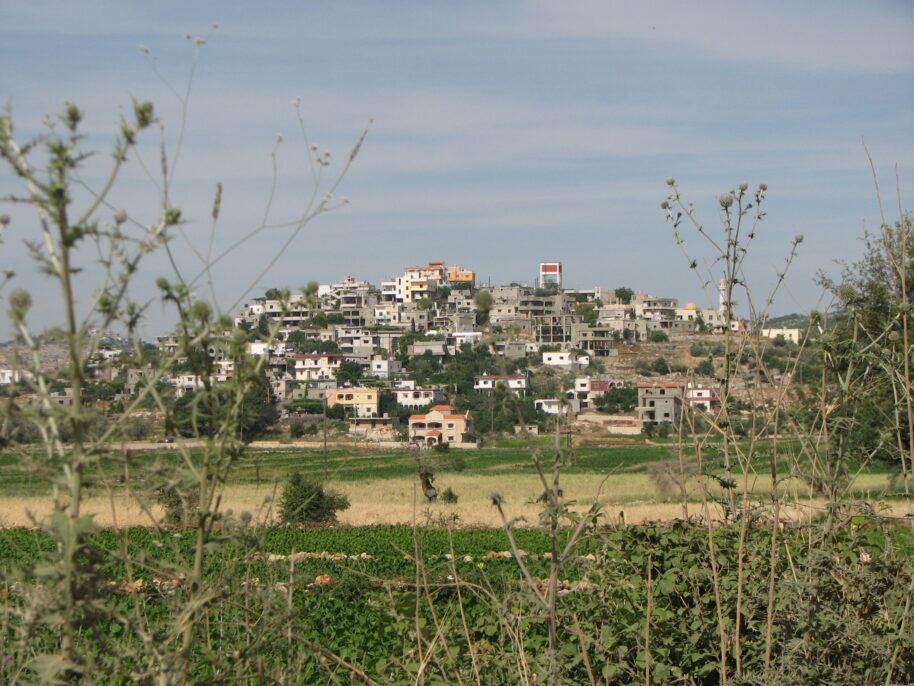
Ramia, the village in South Lebanon where I conducted fieldwork, was blown up in an act of war. On October 20, 2024, one month into a two-month war of annihilation, in a two-year (and counting) war, in a 78-year war that has not ended, Israeli soldiers detonated explosives they had wired throughout the village, forcibly and gradually emptied of human life, blowing it up completely.
Read MoreHaifa: War
Translated by Aaron F. Eldridge
This piece was written on May 13 in Haifa, where mobs of Israeli settlers have violently targeted Palestinians with impunity since May 9 and was published in Arabic on the Cairo-based Mada Masr on May 14. The author included this note to introduce the post: “The last thing I took upon myself before going to the demonstration was to write this post that I sent to a friend, Omar Said. Perhaps it appears unfinished for this very reason: I did not sleep more than 4 hours and for the most part I had assumed that the settlers, with their dreadful numbers, would succeed in invading our neighborhood.” We have asked the author to include some explanatory notes to this English version of the original text…
Read MoreOn Time
Translated and introduced by Alex Brostoff.
On March 6, 2020, at the seventh annual São Paulo International Theater Exhibition (Mostra Internacional de Teatro de São Paulo), a panel on “Anticolonial Perspectives” convened around the question, “What can we still imagine together?” At the opening roundtable, “On Time,” Brazilian Indigenous intellectual and activist Ailton Krenak addressed the occasion and its audience directly. In the remarks that follow, transcribed by Sonia Sobral, Krenak theorizes the polysemic possibilities and ambivalent effects of the encontro, a Portuguese term for an “encounter,” “meeting,” “assembly,” or “conference.” At once imbricated in ongoing colonial practices and imbued with the potentials of a collective subject, the encontro both intensifies and deters ecological disaster. “We are an unsustainable civilization,” Krenak contends, “We are unsustainable.” And yet, the prospect of encountering each other and continuing to imagine otherwise sustains the possibility of another tomorrow.
Read More