On the occasion of your 90th birthday, I wish to offer you these words as a possible “new beginning,” of the kind that you identify as necessary for any liberation.
Read MoreFlirting with the Absolute and the Limitless: Neoliberal Violence as Seen from the South
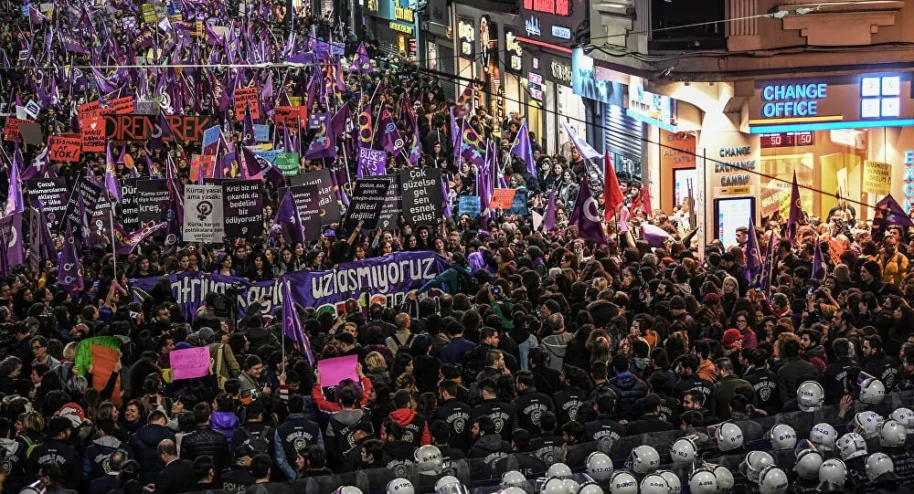
Most theoretical accounts circulating today obfuscate the originary violence at the core of actually existing neoliberalism. Underlying the obfuscation is a particularly tenacious epistemic bias that (1) attributes foundational priority to neoliberal ideas instead of neoliberal practices, and (2) traces the genealogy of neoliberalism in the so-called global North at the expense of its genealogy in the South.
Read MoreSurplus, Waste, and Global Anti-Authoritarian Struggles
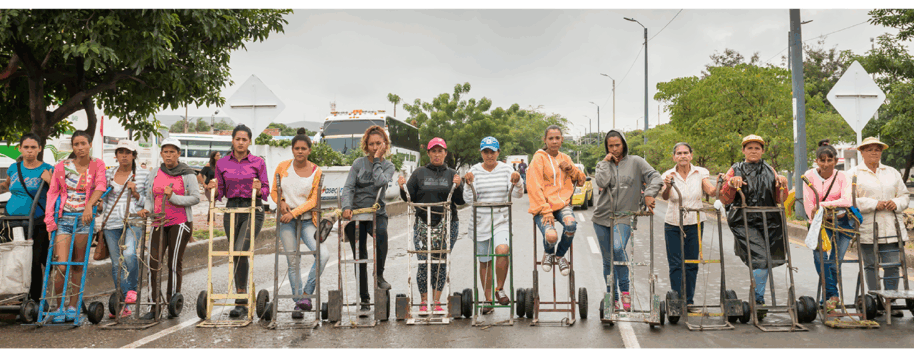
Our conversation explores the relation between authoritarianism and what we might call, with Marx, “surplus populations:” people rendered superfluous or redundant by global capitalism. This relation can be described from different perspectives: either we can focus on the function of social processes of exclusion for authoritarian projects and on the desires for exclusion, punishment, and abjection that they ignite in the authoritarian personality. Or we can look at the subjectivity of people rendered surplus themselves—their own grievances and resentments, but also their potentially emancipatory agency. As we will see, these perspectives depend not only on one’s theoretical background but also on one’s local situation.
Read MoreAvoiding Gaza: An Open Letter
I am taking the liberty of writing an open letter to citizens of Israel, especially those of you who consider Israel a homeland for Jewish people. Though for a long time this letter has been on my mind, I was held back by a grim, harsh sense of futility. In truth, I have little to say that has not been said by others. Perhaps my imagined addressees as well—in case any of you actually comes across this letter—will quickly judge it by skimming a few sentences.
Read MoreOn the Disappearance of Fireflies

In his Scritti corsari (Corsair Writings, 1973-75), Pier Paolo Pasolini made claims that shocked many of his interlocutors in Italy and elsewhere. His critique of the idea of progress would certainly infuriate intellectuals and politicians who struggled for liberal democracy after decades of rule by dictatorship in Southern Europe. In a text he wrote on June 10, 1974, for the Italian newspaper Corriere della Sera, under the title “Italians Are Not What They Used to Be” (retitled “A Study of the Anthropological Revolution in Italy”), Pasolini noted with typical verve:
Read MoreThe Days Before
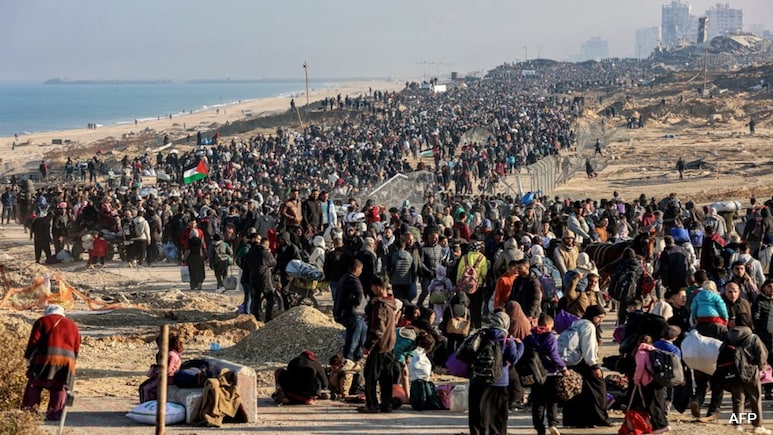
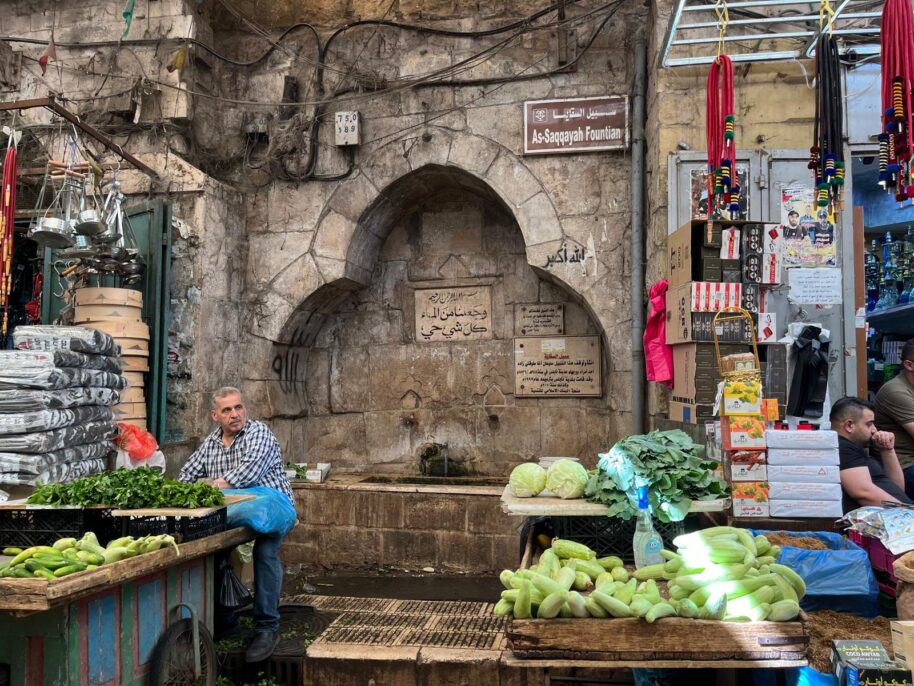
There is nothing to be said. The city is being encircled from the south and the north in preparation for the attack. “Gideon’s Chariots II” signals the continuation of destruction and demolition. The expected outcome for Gaza City, and what remains of its neighborhoods, is a carbon copy of Jabalia, Al-Zaytoun, Al-Tuffah, Shujaiya, and Rafah. A great devastation will turn vibrant neighborhoods into ruins for rodents.
Read MoreFascism: Thinking the Present with History
Reflections on Authoritarian Times
What is fascism? A new wave of authoritarian governments on a global scale has relaunched this debate, but this word that spontaneously rises when we think of Donald Trump, Javier Milei, Giorgia Meloni, or Marine Le Pen is clearly inadequate to describe them. If fascism in the twenty-first century is so different from its forerunners, as many historians explain, maybe we need new concepts to apprehend it.
Read MoreThe Liberal Arts University in the Age of AI and “Activism”
Last summer, while in Kerala, I happened to read Benjamín Labatut’s The Maniac. I was drawn to it because, two years earlier, a very dear friend had gifted me his previous book, When We Cease to Understand the World. Like that book, The Maniac is difficult to classify. It is fiction but draws so heavily on historical events that to call it fiction seems a bit of a stretch, though it would be even more of stretch to call it anything else. So let’s resort to the copout of just calling it a book.
Read MoreNew Authoritarianism as Counterrevolution
Translated by Liz Mason-Deese
Reflections on Authoritarian Times
What is new about the authoritarianism that we are currently witnessing? It is useful to situate this authoritarianism within, and to see it as an organic part of, a counterrevolution: that is, the new authoritarianism operates against the backdrop of the transfeminist, Indigenous, migrant, and antiracist struggles that have modified our understanding and collective experience of the connection between patriarchal, racist, and capitalist forms of violence and have simultaneously produced a set of demands and altered desires and sensibilities.
Read MoreWar, Hate, and Custody: The Kashmir “Problem” and the Indian “Solution”
Reflections on Authoritarian Times
On May 10, 2025, after four terrifying days of shelling and missile and drone attacks along the northern and western border states between India and Pakistan, a ceasefire was ceremonially announced. The US President was among the first to claim credit for it, praising the “common sense and great intelligence” of leaders of both countries — until it became clear that promises of trade deals were what “Trumped” the war. Closer to home, with the polemics of an unabashed bloodthirst losing immediate relevance, the overwrought nerves of a cheerleading troll army had to be directed elsewhere.
Read MoreAuthoritarian Dissolutions of Humanity
Reflections on Authoritarian Times
Serbia is often defined as a hybrid democracy or partocracy, with the ruling Serbian Progressive Party (SNS) composed of 700,000 members in a country with a population of over six and a half million. A semi-peripheral, non-EU European country under the uncontested power of its president, Aleksandar Vučić, it is also described as stabilitocracy: a type of government that claims to “secure stability, pretends to espouse EU integration and relies on informal, clientelist structures, control of the media, and the regular production of crises to undermine democracy and the rule of law.”
Read MoreAfter Liberal Democracy
Reflections on Authoritarian Times
Trump’s win surprised few political realists. What has taken nearly everyone by surprise is the rapid rollout of chaotic authoritarian governing facilitated by a detailed planning and strategy document (Project 2025), plutotechnocratic sycophants like Zuckerberg and Bezos, a docile Republican Party, a hapless Democratic one, a radical right Supreme Court majority, a limp mainstream media, a highly siloed social media, and a dis-educated popular base.
Read More